Effects of Substance Abuse in Families - Ppt
| Substance abuse | |
|---|---|
| Other names | Drug abuse, substance utilise disorder, substance misuse disorder |
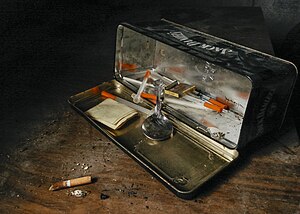 | |
| A tin containing drugs and drug paraphernalia | |
| Specialty | Psychiatry |
| Complications | Drug overdose |
| Frequency | 27 1000000[1] [ii] |
| Deaths | 307,400 (2015)[three] |

A person sniffing an inhalant
Substance abuse, also known as drug abuse, is the use of a drug in amounts or by methods which are harmful to the individual or others. It is a form of substance-related disorder. Differing definitions of drug abuse are used in public health, medical and criminal justice contexts. In some cases, criminal or anti-social behaviour occurs when the person is nether the influence of a drug, and long-term personality changes in individuals may likewise occur.[4] In add-on to possible physical, social, and psychological harm, the use of some drugs may also atomic number 82 to criminal penalties, although these vary widely depending on the local jurisdiction.[5]
Drugs nigh often associated with this term include: alcohol, amphetamines, barbiturates, benzodiazepines, cannabis, cocaine, hallucinogens, methaqualone, and opioids. The exact cause of substance corruption is non clear, but at that place are two predominant theories: either a genetic predisposition or a addiction learned from others, which, if habit develops, manifests itself equally a chronic debilitating disease.[6]
In 2010 about 5% of people (230 million) used an illicit substance.[i] Of these, 27 million have high-adventure drug use—otherwise known as recurrent drug use—causing harm to their health, causing psychological issues, and/or causing social bug that put them at take a chance of those dangers.[1] [two] In 2015, substance use disorders resulted in 307,400 deaths, up from 165,000 deaths in 1990.[3] [vii] Of these, the highest numbers are from alcohol apply disorders at 137,500, opioid utilize disorders at 122,100 deaths, amphetamine use disorders at 12,200 deaths, and cocaine use disorders at 11,100.[3]
Classification [edit]
Public health definitions [edit]
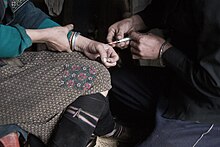
Public health practitioners take attempted to look at substance employ from a broader perspective than the private, emphasizing the part of guild, civilisation, and availability. Some health professionals choose to avoid the terms booze or drug "abuse" in favor of linguistic communication considered more objective, such equally "substance and alcohol type bug" or "harmful/problematic use" of drugs. The Health Officers Quango of British Columbia — in their 2005 policy discussion newspaper, A Public Wellness Arroyo to Drug Control in Canada — has adopted a public health model of psychoactive substance use that challenges the simplistic black-and-white construction of the binary (or complementary) antonyms "use" vs. "abuse".[8] This model explicitly recognizes a spectrum of use, ranging from beneficial use to chronic dependence.
Medical definitions [edit]
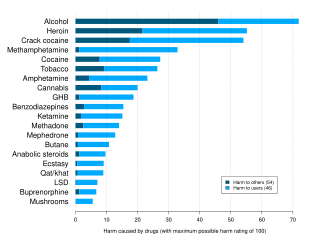
A 2010 study ranking various illegal and legal drugs based on statements by drug-harm experts. Alcohol was plant to be the overall nearly dangerous drug.[9]
'Drug abuse' is no longer a current medical diagnosis in either of the most used diagnostic tools in the globe, the American Psychiatric Association's Diagnostic and Statistical Manual of Mental Disorders (DSM), and the Earth Health System's International Classification of Diseases (ICD).
Value judgment [edit]

This diagram depicts the correlations among the usage of eighteen legal and illegal drugs: alcohol, amphetamines, amyl nitrite, benzodiazepines, cannabis, chocolate, cocaine, caffeine, crack, ecstasy, heroin, ketamine, legal highs, LSD, methadone, magic mushrooms (MMushrooms), nicotine and volatile substance abuse (VSA). Usage is defined equally having used the drug at least once during years 2005–2015. The colored links between drugs indicate the correlations with |r|>0.4, where |r| is the absolute value of the Pearson correlation coefficient.[10]
Philip Jenkins suggests that there are two issues with the term "drug abuse". First, what constitutes a "drug" is debatable. For example, GHB, a naturally occurring substance in the central nervous system is considered a drug, and is illegal in many countries, while nicotine is not officially considered a drug in most countries.
Second, the word "abuse" implies a recognized standard of use for any substance. Drinking an occasional glass of wine is considered acceptable in well-nigh Western countries, while drinking several bottles is seen equally an corruption. Strict temperance advocates, who may or may not exist religiously motivated, would see drinking even one glass as an abuse. Some groups (Mormons, as prescribed in "the Give-and-take of Wisdom") even condemn caffeine use in any quantity. Similarly, adopting the view that any (recreational) use of cannabis or substituted amphetamines constitutes drug abuse implies a decision made that the substance is harmful, even in minute quantities.[11] In the U.S., drugs have been legally classified into 5 categories, schedule I, II, III, IV, or 5 in the Controlled Substances Act. The drugs are classified on their deemed potential for corruption. Usage of some drugs is strongly correlated.[12] For example, the consumption of 7 illicit drugs (amphetamines, cannabis, cocaine, ecstasy, legal highs, LSD, and magic mushrooms) is correlated and the Pearson correlation coefficient r>0.four in every pair of them; consumption of cannabis is strongly correlated (r>0.v) with usage of nicotine (tobacco), heroin is correlated with cocaine (r>0.4) and methadone (r>0.45), and is strongly correlated with cleft (r>0.5)[12]
Drug misuse [edit]
Drug misuse is a term used ordinarily when prescription medication with allaying, anxiolytic, analgesic, or stimulant properties are used for mood amending or intoxication ignoring the fact that overdose of such medicines can sometimes take serious adverse effects. It sometimes involves drug diversion from the individual for whom it was prescribed.
Prescription misuse has been defined differently and rather inconsistently based on status of drug prescription, the uses without a prescription, intentional use to achieve intoxicating effects, route of administration, co-ingestion with alcohol, and the presence or absenteeism of dependence symptoms.[thirteen] [14] Chronic use of certain substances leads to a change in the central nervous organization known as a 'tolerance' to the medicine such that more of the substance is needed in guild to produce desired effects. With some substances, stopping or reducing use can cause withdrawal symptoms to occur,[15] but this is highly dependent on the specific substance in question.
The rate of prescription drug utilise is fast overtaking illegal drug use in the U.s.. According to the National Institute of Drug Abuse, 7 million people were taking prescription drugs for nonmedical use in 2010. Among 12th graders, nonmedical prescription drug use is now second only to cannabis.[xvi] In 2011, "Almost 1 in 12 high school seniors reported nonmedical use of Vicodin; 1 in 20 reported such use of OxyContin."[17] Both of these drugs contain opioids. A 2017 survey of 12th graders in the The states, found misuse of OxyContin of two.7 percent, compared to 5.five percent at its height in 2005.[eighteen] Misuse of the combination hydrocodone/paracetamol was at its lowest since a peak of 10.v per centum in 2003.[18] This subtract may exist related to public health initiatives and decreased availability.[18]
Avenues of obtaining prescription drugs for misuse are varied: sharing between family and friends, illegally ownership medications at school or piece of work, and often "doctor shopping" to find multiple physicians to prescribe the same medication, without knowledge of other prescribers.
Increasingly, law enforcement is holding physicians responsible for prescribing controlled substances without fully establishing patient controls, such as a patient "drug contract". Concerned physicians are educating themselves on how to place medication-seeking beliefs in their patients, and are condign familiar with "carmine flags" that would alert them to potential prescription drug abuse.[19]
Signs and symptoms [edit]
| Drug | Drug form | Physical harm | Dependence liability | Social harm | Avg. harm |
|---|---|---|---|---|---|
| Methamphetamine | CNS stimulant | 3.00 | 2.80 | 2.72 | 2.92 |
| Heroin | Opioid | two.78 | 3.00 | 2.54 | two.77 |
| Cocaine | CNS stimulant | two.33 | 2.39 | 2.17 | 2.thirty |
| Barbiturates | CNS depressant | 2.23 | ii.01 | ii.00 | 2.08 |
| Methadone | Opioid | i.86 | 2.08 | one.87 | 1.94 |
| Alcohol | CNS depressant | i.40 | 1.93 | 2.21 | 1.85 |
| Ketamine | Dissociative anesthetic | ii.00 | 1.54 | i.69 | 1.74 |
| Benzodiazepines | Benzodiazepine | 1.63 | 1.83 | ane.65 | i.70 |
| Amphetamine | CNS stimulant | 1.81 | 1.67 | one.fifty | i.66 |
| Tobacco | Tobacco | 1.24 | 2.21 | 1.42 | 1.62 |
| Buprenorphine | Opioid | ane.lx | ane.64 | 1.49 | 1.58 |
| Cannabis | Cannabinoid | 0.99 | 1.51 | ane.50 | 1.33 |
| Solvent drugs | Inhalant | 1.28 | i.01 | 1.52 | 1.27 |
| 4-MTA | Designer SSRA | 1.44 | i.xxx | 1.06 | 1.27 |
| LSD | Psychedelic | one.13 | i.23 | i.32 | i.23 |
| Methylphenidate | CNS stimulant | 1.32 | one.25 | 0.97 | ane.eighteen |
| Anabolic steroids | Anabolic steroid | 1.45 | 0.88 | i.xiii | one.xv |
| GHB | Neurotransmitter | 0.86 | 1.19 | 1.thirty | 1.12 |
| Ecstasy | Empathogenic stimulant | i.05 | 1.13 | ane.09 | 1.09 |
| Alkyl nitrites | Inhalant | 0.93 | 0.87 | 0.97 | 0.92 |
| Khat | CNS stimulant | 0.l | one.04 | 0.85 | 0.80 |
| Notes about the damage ratings The Physical harm, Dependence liability, and Social impairment scores were each computed from the average of three distinct ratings.[20] The highest possible impairment rating for each rating scale is 3.0.[20] | |||||
Depending on the bodily compound, drug abuse including alcohol may atomic number 82 to health problems, social problems, morbidity, injuries, unprotected sexual practice, violence, deaths, motor vehicle accidents, homicides, suicides, physical dependence or psychological habit.[21]
There is a high rate of suicide in alcoholics and other drug abusers. The reasons believed to cause the increased risk of suicide include the long-term corruption of alcohol and other drugs causing physiological distortion of brain chemistry as well as the social isolation.[22] Some other factor is the acute exhilarant effects of the drugs may make suicide more than probable to occur. Suicide is also very common in adolescent alcohol abusers, with 1 in iv suicides in adolescents being related to booze abuse.[23] In the The states, approximately thirty% of suicides are related to alcohol corruption. Alcohol abuse is also associated with increased risks of committing criminal offences including child abuse, domestic violence, rapes, burglaries and assaults.[24]
Drug corruption, including alcohol and prescription drugs, tin can induce symptomatology which resembles mental illness. This can occur both in the intoxicated state and also during withdrawal. In some cases, substance-induced psychiatric disorders tin persist long afterward detoxification, such equally prolonged psychosis or depression after amphetamine or cocaine abuse. A protracted withdrawal syndrome can also occur with symptoms persisting for months subsequently abeyance of apply. Benzodiazepines are the nigh notable drug for inducing prolonged withdrawal effects with symptoms sometimes persisting for years after cessation of utilize. Both booze, barbiturate as well as benzodiazepine withdrawal can potentially be fatal. Abuse of hallucinogens can trigger delusional and other psychotic phenomena long after cessation of use.
Cannabis may trigger panic attacks during intoxication and with connected use, it may cause a state like to dysthymia.[25] Researchers accept plant that daily cannabis use and the use of high-potency cannabis are independently associated with a college chance of developing schizophrenia and other psychotic disorders.[26] [27] [28]
Severe feet and depression are commonly induced by sustained booze abuse. Even sustained moderate alcohol use may increment feet and depression levels in some individuals. In most cases, these drug-induced psychiatric disorders fade away with prolonged abstinence.[29] Similarly, although substance abuse induces many changes to the brain, there is testify that many of these alterations are reversed following periods of prolonged forbearance.[thirty]
Impulsivity [edit]
Impulsivity is characterized by actions based on sudden desires, whims, or inclinations rather than conscientious idea.[31] Individuals with substance abuse take higher levels of impulsivity,[32] and individuals who use multiple drugs tend to exist more impulsive.[32] A number of studies using the Iowa gambling task as a measure out for impulsive beliefs institute that drug using populations made more than risky choices compared to good for you controls.[33] There is a hypothesis that the loss of impulse command may be due to impaired inhibitory control resulting from drug induced changes that take identify in the frontal cortex.[34] The neurodevelopmental and hormonal changes that happen during adolescence may modulate impulse control that could possibly pb to the experimentation with drugs and may lead to the road of addiction.[35] Impulsivity is thought to be a facet trait in the neuroticism personality domain (overindulgence/negative urgency) which is prospectively associated with the development of substance abuse.[36]
Screening and assessment [edit]
The screening and assessment process of substance use behavior is important for the diagnosis and treatment of substance apply disorders. Screeners is the process of identifying individuals who have or may be at risk for a substance employ disorder and are usually brief to administer.[37] Assessments are used to clarify the nature of the substance use beliefs to aid determine appropriate treatment.[37] Assessments usually require specialized skills, and are longer to administer than screeners.
Given that habit manifests in structural changes to the encephalon, it is possible that non-invasive magnetic resonance imaging could help diagnose habit in the future.[30]
Targeted assessments [edit]
There are several dissimilar screening tools that have been validated for use with adolescents such as the CRAFFT Screening Examination[38] and in adults the Cage questionnaire.[39]Some recommendations for screening tools for substance misuse in pregnancy include that they take less than 10 minutes, should be used routinely, include an educational component. Tools suitable for meaning women include i.a. 4Ps, T-ACE, TWEAK, TQDH (X-Question Drinking History), and Inspect.[twoscore]
Treatment [edit]
Psychological [edit]
From the practical behavior assay literature, behavioral psychology, and from randomized clinical trials, several evidenced based interventions have emerged: behavioral marital therapy, motivational Interviewing, community reinforcement approach, exposure therapy, contingency management[41] [42] They aid suppress cravings and mental anxiety, improve focus on handling and new learning behavioral skills, ease withdrawal symptoms and reduce the chances of relapse.[43]
In children and adolescents, cognitive behavioral therapy (CBT)[44] and family therapy[45] currently has the virtually research show for the treatment of substance abuse problems. Well-established studies besides include ecological family-based treatment and group CBT.[46] These treatments can be administered in a multifariousness of dissimilar formats, each of which has varying levels of research back up[47] Research has shown that what makes group CBT about effective is that information technology promotes the development of social skills, developmentally appropriate emotional regulatory skills and other interpersonal skills.[48] A few integrated[49] treatment models, which combines parts from various types of treatment, accept as well been seen as both well-established or probably effective.[46] A report on maternal alcohol and other drug utilise has shown that integrated treatment programs have produced pregnant results, resulting in higher negative results on toxicology screens.[49] Additionally, brief school-based interventions have been found to be effective in reducing adolescent alcohol and cannabis utilise and abuse.[fifty] Motivational interviewing tin besides be effective in treating substance use disorder in adolescents.[51] [52]
Alcoholics Bearding and Narcotics Anonymous are widely known cocky-help organizations in which members support each other abstain from substances.[53] Social skills are significantly dumb in people suffering from alcoholism due to the neurotoxic furnishings of booze on the encephalon, specially the prefrontal cortex area of the encephalon.[54] It has been suggested that social skills training adjunctive to inpatient treatment of booze dependence is probably efficacious,[55] including managing the social surround.
Medication [edit]
A number of medications accept been approved for the treatment of substance corruption.[56] These include replacement therapies such equally buprenorphine and methadone besides as adversary medications like disulfiram and naltrexone in either short interim, or the newer long acting class. Several other medications, often ones originally used in other contexts, have likewise been shown to be effective including bupropion and modafinil. Methadone and buprenorphine are sometimes used to treat opiate addiction.[57] These drugs are used as substitutes for other opioids and still cause withdrawal symptoms simply they facilitate the tapering off process in a controlled fashion.
Antipsychotic medications have not been found to be useful.[58] Acamprostate[59] is a glutamatergic NMDA adversary, which helps with booze withdrawal symptoms because alcohol withdrawal is associated with a hyperglutamatergic organisation.
Heroin-assisted treatment [edit]
3 countries in Europe have active Chapeau programs, namely England, the Netherlands and Switzerland. Despite critical voices by conservative retrieve-tanks with regard to these liberal approaches, significant progress in the reduction of drug-related deaths has been accomplished in those countries. For example, the US, devoid of such measures, has seen large increases in drug-related deaths since 2000 (more often than not related to heroin use), while Switzerland has seen big decreases. In 2018, approximately 60,000 people have died of drug overdoses in America, while in the aforementioned fourth dimension period, Switzerland'southward drug deaths were at 260. Relative to the population of these countries, the U.s. has 10 times more drug-related deaths compared to the Swiss Confederation, which in consequence illustrates the efficacy of Chapeau to reduce fatal outcomes in opiate/opioid habit.[60] [61]
Dual diagnosis [edit]
It is mutual for individuals with drugs utilise disorder to have other psychological issues.[62] The terms "dual diagnosis" or "co-occurring disorders," refer to having a mental health and substance use disorder at the aforementioned time. According to the British Association for Psychopharmacology (BAP), "symptoms of psychiatric disorders such every bit depression, anxiety and psychosis are the rule rather than the exception in patients misusing drugs and/or alcohol."[63]
Individuals who accept a comorbid psychological disorder often take a poor prognosis if either disorder is untreated.[62] Historically most individuals with dual diagnosis either received treatment merely for 1 of their disorders or they didn't receive any treatment all. Yet, since the 1980s, there has been a push towards integrating mental health and addiction treatment. In this method, neither condition is considered master and both are treated simultaneously past the aforementioned provider.[63]
Epidemiology [edit]
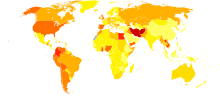
Disability-adjusted life year for drug use disorders per 100,000 inhabitants in 2004.
no data
<40
40–80
eighty–120
120–160
160–200
200–240
240–280
280–320
320–360
360–400
400–440
>440
The initiation of drug use including booze is about probable to occur during adolescence, and some experimentation with substances by older adolescents is mutual. For example, results from 2010 Monitoring the Hereafter survey, a nationwide written report on rates of substance utilize in the United States, show that 48.two% of 12th graders report having used an illicit drug at some point in their lives.[64] In the 30 days prior to the survey, 41.2% of 12th graders had consumed booze and 19.2% of 12th graders had smoked tobacco cigarettes.[64] In 2009 in the U.s. about 21% of high school students take taken prescription drugs without a prescription.[65] And before in 2002, the World Health Arrangement estimated that effectually 140 million people were alcohol dependent and another 400 million with alcohol-related problems.[66]
Studies have shown that the big majority of adolescents will phase out of drug use earlier information technology becomes problematic. Thus, although rates of overall utilize are high, the percentage of adolescents who meet criteria for substance abuse is significantly lower (close to 5%).[67] According to BBC, "Worldwide, the Un estimates at that place are more than than fifty million regular users of morphine diacetate (heroin), cocaine and synthetic drugs."[68]
More than than 70,200 Americans died from drug overdoses in 2017.[69] Among these, the sharpest increment occurred among deaths related to fentanyl and synthetic opioids (28,466 deaths).[69] See charts beneath.
-
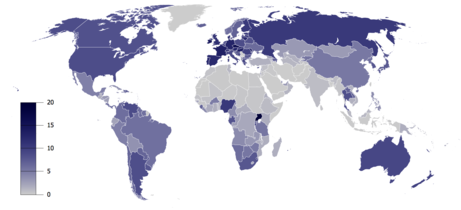
Total recorded alcohol per capita consumption (fifteen+), in litres of pure alcohol[lxx]
-
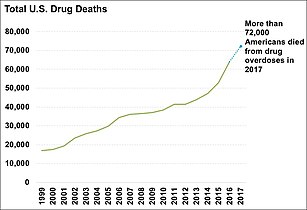
Full yearly U.S. drug deaths.[69]
-
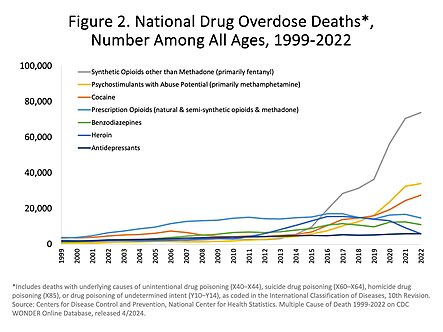
US yearly overdose deaths, and the drugs involved.[69]
History [edit]
APA, AMA, and NCDA [edit]
In 1932, the American Psychiatric Association created a definition that used legality, social acceptability, and cultural familiarity equally qualifying factors:
…as a general rule, we reserve the term drug abuse to apply to the illegal, nonmedical utilise of a limited number of substances, most of them drugs, which have properties of altering the mental country in ways that are considered by social norms and defined by statute to be inappropriate, undesirable, harmful, threatening, or, at minimum, culture-conflicting.[71]
In 1966, the American Medical Association's Committee on Alcoholism and Addiction defined corruption of stimulants (amphetamines, primarily) in terms of 'medical supervision':
…'employ' refers to the proper place of stimulants in medical practise; 'misuse' applies to the physician's role in initiating a potentially unsafe course of therapy; and 'abuse' refers to self-administration of these drugs without medical supervision and particularly in large doses that may atomic number 82 to psychological dependency, tolerance and abnormal behavior.
In 1973, the National Commission on Marijuana and Drug Abuse stated:
...drug corruption may refer to any type of drug or chemic without regard to its pharmacologic actions. Information technology is an eclectic concept having only one uniform connotation: societal disapproval. ... The Commission believes that the term drug abuse must be deleted from official pronouncements and public policy dialogue. The term has no functional utility and has become no more than an capricious codeword for that drug employ which is presently considered incorrect.[72]
DSM [edit]
The starting time edition of the American Psychiatric Association'southward Diagnostic and Statistical Manual of Mental Disorders (published in 1952) grouped booze and other drug abuse nether Sociopathic Personality Disturbances, which were thought to be symptoms of deeper psychological disorders or moral weakness.[73] The 3rd edition, published in 1980, was the first to recognize substance corruption (including drug abuse) and substance dependence as conditions separate from substance abuse lone, bringing in social and cultural factors. The definition of dependence emphasised tolerance to drugs, and withdrawal from them as key components to diagnosis, whereas abuse was divers as "problematic use with social or occupational impairment" just without withdrawal or tolerance.
In 1987, the DSM-IIIR category "psychoactive substance abuse," which includes sometime concepts of drug corruption is defined as "a maladaptive pattern of use indicated past...continued apply despite cognition of having a persistent or recurrent social, occupational, psychological or physical trouble that is caused or exacerbated by the use (or by) recurrent use in situations in which it is physically chancy." It is a residue category, with dependence taking precedence when applicable. Information technology was the start definition to requite equal weight to behavioural and physiological factors in diagnosis. By 1988, the DSM-IV defines substance dependence as "a syndrome involving compulsive use, with or without tolerance and withdrawal"; whereas substance abuse is "problematic utilise without compulsive use, significant tolerance, or withdrawal." Substance abuse can be harmful to your health and may even exist deadly in certain scenarios. By 1994, The fourth edition of the Diagnostic and Statistical Manual of Mental Disorders (DSM) issued past the American Psychiatric Association, the DSM-Iv-TR, defines substance dependence equally "when an individual persists in use of alcohol or other drugs despite problems related to apply of the substance, substance dependence may be diagnosed." along with criteria for the diagnosis.[74]
DSM-IV-TR defines substance abuse equally:[75]
-
- A. A maladaptive pattern of substance employ leading to clinically meaning impairment or distress, as manifested by one (or more) of the following, occurring within a 12-month period:
-
- Recurrent substance use resulting in a failure to fulfill major part obligations at piece of work, school, or habitation (east.1000., repeated absences or poor work functioning related to substance utilize; substance-related absences, suspensions or expulsions from school; neglect of children or household)
- Recurrent substance use in situations in which it is physically hazardous (e.g., driving an automobile or operating a auto when impaired by substance use)
- Recurrent substance-related legal problems (eastward.g., arrests for substance-related hell-raising conduct)
- Connected substance use despite having persistent or recurrent social or interpersonal problems caused or exacerbated past the effects of the substance (east.g., arguments with spouse well-nigh consequences of intoxication, physical fights)
- B. The symptoms have never met the criteria for Substance Dependence for this class of substance.
The fifth edition of the DSM (DSM-5), was released in 2013, and it revisited this terminology. The principal change was a transition from the abuse/dependence terminology. In the DSM-IV era, corruption was seen equally an early grade or less hazardous grade of the illness characterized with the dependence criteria. However, the APA'southward 'dependence' term, as noted above, does not mean that physiologic dependence is present but rather means that a affliction country is present, one that most would likely refer to as an addicted state. Many involved recognize that the terminology has often led to confusion, both inside the medical community and with the full general public. The American Psychiatric Association requested input as to how the terminology of this disease should be altered every bit information technology moves forward with DSM-five discussion.[76] In the DSM-5, substance abuse and substance dependence accept been merged into the category of substance use disorders and they now longer exist every bit individual concepts. While substance abuse and dependence were either present or not, substance apply disorder has three levels of severity: mild, moderate and severe.[77]
Society and civilisation [edit]
Legal approaches [edit]
- Related manufactures: Drug control police force, Prohibition (drugs), Arguments for and against drug prohibition, Damage reduction
Nearly governments have designed legislation to criminalize certain types of drug use. These drugs are often called "illegal drugs" but by and large what is illegal is their unlicensed product, distribution, and possession. These drugs are also chosen "controlled substances". Even for simple possession, legal penalty tin can be quite severe (including the capital punishment in some countries). Laws vary beyond countries, and fifty-fifty within them, and have fluctuated widely throughout history.

1991 Indian postage stamp begetting the slogan – Beware of drugs
Attempts by authorities-sponsored drug command policy to interdict drug supply and eliminate drug abuse have been largely unsuccessful. In spite of the huge efforts by the U.South., drug supply and purity has reached an all-time high, with the vast bulk of resources spent on interdiction and police enforcement instead of public health.[78] [79] In the United States, the number of irenic drug offenders in prison exceeds by 100,000 the total incarcerated population in the European union, despite the fact that the Eu has 100 million more than citizens.[eighty]
Despite drug legislation (or peradventure because of it), large, organized criminal drug cartels operate worldwide. Advocates of decriminalization fence that drug prohibition makes drug dealing a lucrative business, leading to much of the associated criminal activeness.
Price [edit]
Policymakers endeavor to understand the relative costs of drug-related interventions. An appropriate drug policy relies on the assessment of drug-related public expenditure based on a classification system where costs are properly identified.
Labelled drug-related expenditures are defined as the direct planned spending that reflects the voluntary engagement of the country in the field of illicit drugs. Direct public expenditures explicitly labeled as drug-related can exist easily traced back by exhaustively reviewing official accountancy documents such as national budgets and year-end reports. Unlabelled expenditure refers to unplanned spending and is estimated through modeling techniques, based on a top-down budgetary procedure. Starting from overall aggregated expenditures, this process estimates the proportion causally owing to substance corruption (Unlabelled Drug-related Expenditure = Overall Expenditure × Attributable Proportion). For example, to guess the prison drug-related expenditures in a given state, two elements would be necessary: the overall prison house expenditures in the state for a given period, and the attributable proportion of inmates due to drug-related bug. The product of the two volition give a rough estimate that tin can exist compared across different countries.[81]
Europe [edit]
Equally part of the reporting do corresponding to 2005, the European Monitoring Eye for Drugs and Drug Habit's network of national focal points set up in the 27 European Union (EU) Member States, Norway, and the candidates countries to the EU, were requested to identify labeled drug-related public expenditure, at the state level.[81]
This was reported by x countries categorized according to the functions of regime, amounting to a full of EUR 2.17 billion. Overall, the highest proportion of this total came within the government functions of Health (66%) (e.k. medical services), and Public Order and Safety (POS) (20%) (e.g. police services, police courts, prisons). By country, the average share of GDP was 0.023% for Health, and 0.013% for POS. However, these shares varied considerably across countries, ranging from 0.00033% in Slovakia, up to 0.053% of GDP in Ireland in the case of Wellness, and from 0.003% in Portugal, to 0.02% in the UK, in the case of POS; nigh a 161-fold difference between the highest and the lowest countries for Wellness, and a 6-fold difference for POS. Why do Republic of ireland and the UK spend so much in Health and POS, or Slovakia and Portugal so little, in Gross domestic product terms?
To reply to this question and to brand a comprehensive assessment of drug-related public expenditure across countries, this study compared Health and POS spending and Gross domestic product in the ten reporting countries. Results found suggest Gross domestic product to be a major determinant of the Health and POS drug-related public expenditures of a country. Labelled drug-related public expenditure showed a positive association with the GDP beyond the countries considered: r = 0.81 in the example of Health, and r = 0.91 for POS. The percentage modify in Health and POS expenditures due to a one percent increase in GDP (the income elasticity of demand) was estimated to be 1.78% and ane.23% respectively.
Being highly income elastic, Health and POS expenditures can exist considered luxury appurtenances; as a nation becomes wealthier it openly spends proportionately more on drug-related wellness and public order and prophylactic interventions.[81]
United Kingdom [edit]
The UK Dwelling house Role estimated that the social and economic cost of drug corruption[82] to the UK economy in terms of crime, absenteeism and sickness is in excess of £20 billion a year.[83] However, the Britain Dwelling house Role does not estimate what portion of those crimes are unintended consequences of drug prohibition (crimes to sustain expensive drug consumption, risky production and dangerous distribution), nor what is the price of enforcement. Those aspects are necessary for a total assay of the economic science of prohibition.[84]
Us [edit]
| Year | Price (billions of dollars) [85] |
|---|---|
| 1992 | 107 |
| 1993 | 111 |
| 1994 | 117 |
| 1995 | 125 |
| 1996 | 130 |
| 1997 | 134 |
| 1998 | 140 |
| 1999 | 151 |
| 2000 | 161 |
| 2001 | 170 |
| 2002 | 181 |
These figures stand for overall economic costs, which can be divided in three major components: health costs, productivity losses and not-health direct expenditures.
- Health-related costs were projected to total $16 billion in 2002.
- Productivity losses were estimated at $128.6 billion. In contrast to the other costs of drug corruption (which involve straight expenditures for goods and services), this value reflects a loss of potential resources: piece of work in the labor market place and in household production that was never performed, but could reasonably be expected to take been performed absent the impact of drug abuse.
- Included are estimated productivity losses due to premature expiry ($24.six billion), drug abuse-related illness ($33.4 billion), incarceration ($39.0 billion), law-breaking careers ($27.half dozen billion) and productivity losses of victims of crime ($1.8 billion).
- The not-health direct expenditures primarily concern costs associated with the criminal justice system and crime victim costs, just also include a modest level of expenses for administration of the social welfare system. The total for 2002 was estimated at $36.4 billion. The largest detailed component of these costs is for state and federal corrections at $fourteen.two billion, which is primarily for the functioning of prisons. Another $9.8 billion was spent on state and local police protection, followed by $half dozen.2 billion for federal supply reduction initiatives.
According to a study from the Agency for Healthcare Inquiry and Quality (AHRQ), Medicaid was billed for a significantly college number of hospitals stays for Opioid drug overuse than Medicare or individual insurance in 1993. Past 2012, the differences were diminished. Over the same time, Medicare had the almost rapid growth in number of hospital stays.[86]
Special populations [edit]
Immigrants and refugees [edit]
Immigrant and refugees have ofttimes been under not bad stress,[87] concrete trauma and depression and feet due to separation from loved ones often narrate the pre-migration and transit phases, followed past "cultural dissonance," language barriers, racism, bigotry, economic adversity, overcrowding, social isolation, and loss of condition and difficulty obtaining work and fears of deportation are common. Refugees frequently feel concerns about the health and safety of loved ones left backside and uncertainty regarding the possibility of returning to their country of origin.[88] [89] For some, substance abuse functions as a coping mechanism to effort to deal with these stressors.[89]
Immigrants and refugees may bring the substance use and abuse patterns and behaviors of their land of origin,[89] or adopt the attitudes, behaviors, and norms regarding substance employ and abuse that be within the dominant civilization into which they are entering.[89] [90]
Street children [edit]
Street children in many developing countries are a high take chances grouping for substance misuse, in item solvent corruption.[91] Drawing on research in Kenya, Cottrell-Boyce argues that "drug use amongst street children is primarily functional – dulling the senses against the hardships of life on the street – but can also provide a link to the support structure of the 'street family unit' peer group every bit a strong symbol of shared experience."[92]
Musicians [edit]
In order to maintain high-quality performance, some musicians take chemical substances.[93] Some musicians take drugs such as booze to bargain with the stress of performing. As a group they take a higher rate of substance abuse.[93] The nigh mutual chemical substance which is driveling by pop musicians is cocaine,[93] because of its neurological effects. Stimulants like cocaine increment alertness and crusade feelings of euphoria, and tin can therefore make the performer feel every bit though they in some ways 'own the stage'. One way in which substance abuse is harmful for a performer (musicians especially) is if the substance being abused is aspirated. The lungs are an important organ used by singers, and addiction to cigarettes may seriously damage the quality of their performance.[93] Smoking harms the alveoli, which are responsible for absorbing oxygen.
Veterans [edit]
Substance corruption tin be a factor that affects the physical and mental health of veterans. Substance corruption may also harm personal and familial relationships, leading to financial difficulty. At that place is evidence to suggest that substance abuse disproportionately affects the homeless veteran population. A 2015 Florida report, which compared causes of homelessness between veterans and non-veteran populations in a self-reporting questionnaire, found that 17.8% of the homeless veteran participants attributed their homelessness to alcohol and other drug-related problems compared to just three.7% of the non-veteran homeless group.[94]
A 2003 study found that homelessness was correlated with access to support from family/friends and services. Still, this correlation was not true when comparison homeless participants who had a electric current substance-utilise disorders.[95] The U.S. Department of Veterans Affairs provides a summary of treatment options for veterans with substance-use disorder. For treatments that do not involve medication, they offer therapeutic options that focus on finding outside support groups and "looking at how substance use problems may chronicle to other problems such equally PTSD and low".[96]
Sex and gender [edit]
At that place are many sex differences in substance corruption.[97] [98] [99] Men and Women express differences in the short and long-term furnishings of substance abuse. These differences can be credited to sexual dimorphisms in brain, endocrine and metabolic systems. Social and environmental factors that tend to unduly upshot women; such as child and elderberry care and the risk of exposure to violence are likewise factors in the gender differences in substance corruption.[97] Women study having greater damage in areas such as employment, family and social functioning when abusing substances but have a similar response to handling. Co-occurring psychiatric disorders are more than mutual among women than men who abuse substances; women more frequently apply substances to reduce the negative effects of these co-occurring disorders. Substance corruption puts both men and women at higher risk for perpetration and victimization of sexual violence.[97] Men tend to accept drugs for the first time to exist part of a group and fit in more so than women. At first interaction, women may experience more pleasance from drugs than men do. Women tend to progress more quickly from start experience to habit than men.[98] Physicians, psychiatrists and social workers accept believed for decades that women escalate alcohol utilize more chop-chop one time they showtime. Once the addictive beliefs is established for women they stabilize at higher doses of drugs than males practice. When withdrawing from smoking women experience greater stress response. Males experience greater symptoms when withdrawing from alcohol.[98] There are even gender differences when it comes to rehabilitation and relapse rates. For alcohol, relapse rates were very similar for men and women. For women, wedlock and marital stress were risk factors for alcohol relapse. For men, being married lowered the risk of relapse.[99] This difference may be a result of gendered differences in excessive drinking. Alcoholic women are much more probable to be married to partners that drinkable excessively than are alcoholic men. As a event of this, men may be protected from relapse by spousal relationship while women are out at college risk when married. Still, women are less likely than men to experience relapse to substance use. When men experience a relapse to substance use, they more than likely had a positive experience prior to the relapse. On the other hand, when women relapse to substance employ, they were more than likely affected by negative circumstances or interpersonal problems.[99]
See also [edit]
- ΔFosB
- Addictive personality
- Alcohol abuse
- Combined drug intoxication
- Controlled Substances Act
- Drug addiction
- Drug overdose
- Handbook on Drug and Alcohol Abuse
- Harm reduction
- List of controlled drugs in the U.k.
- List of deaths from drug overdose and intoxication
- Low-threshold treatment programs
- Needle-exchange programme
- Poly drug use
- Polysubstance corruption
- Responsible drug use
- Supervised injection site
References [edit]
- ^ a b c "World Drug Written report 2012" (PDF). UNITED NATIONS. Retrieved 27 September 2016.
- ^ a b "EMCDDA | Data on the high-run a risk drug use (HRDU) (formerly 'problem drug use' (PDU)) key indicator". emcdda.europa.eu . Retrieved 2016-09-27 .
- ^ a b c GBD 2015 Mortality and Causes of Death Collaborators (8 October 2016). "Global, regional, and national life expectancy, all-crusade bloodshed, and crusade-specific mortality for 249 causes of death, 1980–2015: a systematic assay for the Global Burden of Disease Written report 2015". Lancet. 388 (10053): 1459–1544. doi:10.1016/S0140-6736(xvi)31012-1. PMC5388903. PMID 27733281.
- ^ Ksir, Oakley Ray; Charles (2002). Drugs, society, and human behavior (ninth ed.). Boston [u.a.]: McGraw-Hill. ISBN978-0072319637.
- ^ (2002). Mosby's Medical, Nursing & Allied Health Dictionary. 6th Edition. Drug abuse definition, p. 552. Nursing diagnoses, p. 2109. ISBN 0-323-01430-v.
- ^ "Addiction is a Chronic Disease". Archived from the original on 24 June 2014. Retrieved ii July 2014.
- ^ GBD 2013 Mortality and Causes of Death, Collaborators (17 Dec 2014). "Global, regional, and national historic period-sexual activity specific all-cause and cause-specific bloodshed for 240 causes of death, 1990–2013: a systematic assay for the Global Burden of Disease Study 2013". Lancet. 385 (9963): 117–71. doi:10.1016/S0140-6736(fourteen)61682-2. PMC4340604. PMID 25530442.
- ^ "A Public Health Arroyo" (PDF) . Retrieved 1 April 2017.
- ^ Nutt, David J; Rex, Leslie A; Phillips, Lawrence D (November 2010). "Drug harms in the Britain: a multicriteria decision assay". The Lancet. 376 (9752): 1558–1565. CiteSeerX10.i.1.690.1283. doi:10.1016/S0140-6736(10)61462-half dozen. PMID 21036393. S2CID 5667719.
- ^ Eastward. Fehrman, A. Thousand. Muhammad, E. G. Mirkes, V. Egan, A. North. Gorban,The Five Cistron Model of personality and evaluation of drug consumption run a risk, arXiv:1506.06297 [stat.AP], 2015
- ^ Philip Jenkins, Synthetic panics: the symbolic politics of designer drugs, NYU Press, 1999, ISBN 0-8147-4244-0, pp. ix–ten
- ^ a b Fehrman, Elaine; Egan, Vincent; Gorban, Alexander N.; Levesley, Jeremy; Mirkes, Evgeny M.; Muhammad, Awaz K. (2019). Personality Traits and Drug Consumption. A Story Told by Data. Springer, Cham. arXiv:2001.06520. doi:10.1007/978-3-030-10442-9. ISBN978-iii-030-10441-2. S2CID 151160405.
- ^ Barrett SP, Meisner JR, Stewart SH (November 2008). "What constitutes prescription drug misuse? Problems and pitfalls of current conceptualizations" (PDF). Curr Drug Abuse Rev. one (3): 255–62. doi:x.2174/1874473710801030255. PMID 19630724. Archived from the original (PDF) on 2010-06-15.
- ^ McCabe SE, Boyd CJ, Teter CJ (June 2009). "Subtypes of nonmedical prescription drug misuse". Drug Booze Depend. 102 (one–3): 63–lxx. doi:10.1016/j.drugalcdep.2009.01.007. PMC2975029. PMID 19278795.
- ^ Antai-Otong, D. 2008. Psychiatric Nursing: Biological and Behavioral Concepts. 2d edition. Canada: Thompson Delmar Learning
- ^ "The Prescription Drug Abuse Epidemic". PDMP Eye of Excellence. 2010–2013.
- ^ "Topics in Brief: Prescription Drug Abuse" Archived 2014-09-24 at the Wayback Auto NIDA, December 2011.
- ^ a b c "Vaping popular among teens; opioid misuse at celebrated lows". National Institute on Drug Abuse. xiv December 2017. Archived from the original on 29 May 2020. Retrieved 10 April 2019.
- ^ "Combating Prescription Drug Abuse in Your Do" Archived 2012-06-eighteen at the Wayback Auto Aubrey Westgate, Physicians Practise, June 2012.
- ^ a b c d e f Nutt, D.; Male monarch, L. A.; Saulsbury, W.; Blakemore, C. (2007). "Development of a rational scale to assess the harm of drugs of potential misuse". The Lancet. 369 (9566): 1047–1053. doi:10.1016/S0140-6736(07)60464-4. PMID 17382831. S2CID 5903121.
- ^ Shush PJ, O'Sullivan J, Vaughan BL (Nov 2005). "Adolescent substance use: brief interventions past emergency care providers". Pediatr Emerg Care. 21 (11): 770–6. doi:ten.1097/01.pec.0000186435.66838.b3. PMID 16280955. S2CID 36410538.
- ^ Serafini G, Innamorati M, Dominici G, Ferracuti Due south, Kotzalidis GD, Serra G (April 2010). "Suicidal Beliefs and Booze Abuse". International Periodical of Environmental Research and Public Health. International Journal Environmental Research and Public Health. 7 (4): 1392–1431. doi:10.3390/ijerph7041392. PMC2872355. PMID 20617037.
- ^ O'Connor, Rory; Sheehy, Noel (29 January 2000). Understanding suicidal behaviour. Leicester: BPS Books. pp. 33–36. ISBN978-1-85433-290-five.
- ^ Isralowitz, Richard (2004). Drug use: a reference handbook. Santa Barbara, Calif.: ABC-CLIO. pp. 122–123. ISBN978-1-57607-708-five.
- ^ University of Miami: Substance Abuse, Substance Corruption and Health Risks
- ^ "High-strength skunk 'now dominates' U.k. cannabis market". nhs.uk. 28 February 2018. Archived from the original on 11 Nov 2020. Retrieved xviii January 2021.
- ^ Di Forti Yard, Marconi A, Carra East, Fraietta S, Trotta A, Bonomo K, Bianconi F, Gardner-Sood P, O'Connor J, Russo G, Stilo SA, Marques TR, Mondelli V, Dazzan P, Pariante C, David AS, Gaughran F, Atakan Z, Iyegbe C, Powell J, Morgan C, Lynskey M, Murray RM (2015). "Proportion of patients in s London with first-episode psychosis attributable to use of high authority cannabis: a case-command report" (PDF). Lancet Psychiatry. two (3): 233–8. doi:x.1016/S2215-0366(14)00117-5. PMID 26359901.
- ^ Marta Di Forti (17 Dec 2013). "Daily Apply, Especially of Loftier-Authorisation Cannabis, Drives the Earlier Onset of Psychosis in Cannabis Users". Schizophrenia Message. 40 (6): 1509–1517. doi:10.1093/schbul/sbt181. PMC4193693. PMID 24345517.
- ^ Evans, Katie; Sullivan, Michael J. (i March 2001). Dual Diagnosis: Counseling the Mentally Ill Substance Abuser (2d ed.). Guilford Press. pp. 75–76. ISBN978-1-57230-446-viii.
- ^ a b Hampton WH, Hanik I, Olson IR (2019). "[Substance Corruption and White Matter: Findings, Limitations, and Future of Improvidence Tensor Imaging Inquiry]". Drug and Alcohol Dependence. 197 (4): 288–298. doi:10.1016/j.drugalcdep.2019.02.005. PMC6440853. PMID 30875650.
Given that our the central nervous system is an intricately balanced, complex network of billions of neurons and supporting cells, some might imagine that extrinsic substances could cause irreversible encephalon damage. Our review paints a less gloomy film of the substances reviewed, however. Following prolonged abstinence, abusers of alcohol (Pfefferbaum et al., 2014) or opiates (Wang et al., 2011) have white matter microstructure that is not significantly dissimilar from not-users. There was likewise no bear witness that the white affair microstructural changes observed in longitudinal studies of cannabis, nicotine, or cocaine were completely irreparable. It is therefore possible that, at least to some degree, abstinence tin opposite furnishings of substance abuse on white matter. The power of white matter to "bounce back" very likely depends on the level and duration of abuse, besides as the substance being abused.
- ^ "Impulsivity". The Gratis Dictionary.
- ^ a b Gerard Moeller M.D., Barratt Ernest South., Ph, Dougherty Donald Thou., Ph, Schmitz Joy M., Ph, Swann Alan C. (2001). "Psychiatric Aspects of Impulsivity". The American Journal of Psychiatry. 158 (11): 1783–93. doi:10.1176/appi.ajp.158.11.1783. PMID 11691682. Archived from the original on Apr 15, 2013.
{{cite periodical}}: CS1 maint: multiple names: authors list (link) - ^ Bishara AJ, Pleskac TJ, Fridberg DJ, Yechiam Eastward, Lucas J, Busemeyer JR, Finn PR, Stout JC (2009). "Like Processes Despite Divergent Behavior in Two Ordinarily Used Measures of Risky Determination Making". J Behav Decis Mak. 22 (4): 435–454. doi:10.1002/bdm.641. PMC3152830. PMID 21836771.
- ^ Kreek, Mary Jeanne; Nielsen, David A; Butelman, Eduardo R; LaForge, G Steven (26 Oct 2005). "Genetic influences on impulsivity, run a risk taking, stress responsivity and vulnerability to drug corruption and habit". Nature Neuroscience. 8 (11): 1450–1457. doi:ten.1038/nn1583. PMID 16251987. S2CID 12589277.
- ^ Chambers RA, Taylor JR, Potenza MN (2003). "Developmental neurocircuitry of motivation in adolescence: a disquisitional menses of addiction vulnerability". Am J Psychiatry. 160 (6): 1041–52. doi:10.1176/appi.ajp.160.6.1041. PMC2919168. PMID 12777258.
- ^ Jeronimus B.F.; Kotov, R.; Riese, H.; Ormel, J. (2016). "Neuroticism'due south prospective association with mental disorders halves subsequently adjustment for baseline symptoms and psychiatric history, but the adjusted association inappreciably decays with time: a meta-analysis on 59 longitudinal/prospective studies with 443 313 participants". Psychological Medicine. 46 (xiv): 2883–2906. doi:10.1017/S0033291716001653. PMID 27523506. S2CID 23548727.
- ^ a b Handling, Middle for Substance Abuse (1997). Chapter ii—Screening for Substance Use Disorders. Substance Corruption and Mental Health Services Administration (U.s.a.).
- ^ Knight JR, Shrier LA, Harris SK, Chang G (2002). "Validity of the CRAFFT substance abuse screening test among adolescent clinic patients". JAMA Pediatrics. 156 (6): 607–614. doi:10.1001/archpedi.156.6.607. PMID 12038895.
- ^ Dhalla S, Kopec JA (2007). "The Muzzle questionnaire for booze misuse: a review of reliability and validity studies". Clinical and Investigative Medicine. 30 (1): 33–41. doi:x.25011/cim.v30i1.447. PMID 17716538.
- ^ Morse, Barbara (1997). Screening for Substance Corruption During Pregnancy: Improving Intendance, Improving Health (PDF). pp. iv–5. ISBN978-1-57285-042-2.
- ^ O'Donohue, W; Thousand.East. Ferguson (2006). "Evidence-Based Exercise in Psychology and Behavior Analysis". The Behavior Analyst Today. 7 (three): 335–350. doi:10.1037/h0100155. Retrieved 2008-03-24 .
- ^ Chambless, D.Fifty.; et al. (1998). "An update on empirically validated therapies" (PDF). Clinical Psychology. 49: 5–14. Retrieved 2008-03-24 .
- ^ "NIH Senior Wellness "Build With You in Mind": Survey". nihseniorhealth.gov. Archived from the original on 2015-08-11. Retrieved 29 July 2015.
- ^ "Association for Behavioral and Cognitive Therapies – What is CBT?". Archived from the original on 2010-04-21.
- ^ "Association for Behavioral and Cognitive Therapies – What is Family Therapy?". Archived from the original on 2010-06-13.
- ^ a b Hogue, A; Henderson, CE; Ozechowski, TJ; Robbins, MS (2014). "Evidence base of operations on outpatient behavioral treatments for adolescent substance apply: updates and recommendations 2007–2013". Journal of Clinical Child and Adolescent Psychology. 43 (5): 695–720. doi:ten.1080/15374416.2014.915550. PMID 24926870. S2CID 10036629.
- ^ "Association for Behavioral and Cognitive Therapies – Treatment for Substance Utilize Disorders". Archived from the original on 2010-04-21.
- ^ Engle, Bretton; Macgowan, Marking J. (2009-08-05). "A Critical Review of Adolescent Substance Corruption Group Treatments". Periodical of Testify-Based Social Work. 6 (iii): 217–243. doi:10.1080/15433710802686971. ISSN 1543-3714. PMID 20183675. S2CID 3293758.
- ^ a b "Maternal substance use and integrated treatment programs for women with substance corruption problems and their children: a meta-analysis". crd.york.ac.uk . Retrieved 2016-03-09 .
- ^ Carney, Tara; Myers, Bronwyn J; Louw, Johann; Okwundu, Charles I (2016-01-20). "Brief school-based interventions and behavioural outcomes for substance-using adolescents". Cochrane Database of Systematic Reviews (1): CD008969. doi:x.1002/14651858.cd008969.pub3. hdl:10019.one/104381. PMC7119449. PMID 26787125.
- ^ Jensen, Republic of chad D.; Cushing, Christopher C.; Aylward, Brandon South.; Craig, James T.; Sorell, Danielle M.; Steele, Ric G. (2011). "Effectiveness of motivational interviewing interventions for adolescent substance use beliefs change: A meta-analytic review". Journal of Consulting and Clinical Psychology. 79 (4): 433–440. doi:10.1037/a0023992. PMID 21728400. S2CID 19892519.
- ^ Barnett, Elizabeth; Sussman, Steve; Smith, Caitlin; Rohrbach, Louise A.; Spruijt-Metz, Donna (2012). "Motivational Interviewing for adolescent substance employ: A review of the literature". Addictive Behaviors. 37 (12): 1325–1334. doi:10.1016/j.addbeh.2012.07.001. PMC3496394. PMID 22958865.
- ^ "Self-Assist Groups Article". Retrieved May 27, 2015.
- ^ Uekermann J, Daum I (May 2008). "Social knowledge in alcoholism: a link to prefrontal cortex dysfunction?". Addiction. 103 (v): 726–35. doi:10.1111/j.1360-0443.2008.02157.x. PMID 18412750.
- ^ Purvis Chiliad.; MacInnis D. Thousand. (2009). "Implementation of the Community Reinforcement Arroyo (CRA) in a Long-Standing Addictions Outpatient Dispensary" (PDF). Periodical of Behavior Analysis of Sports, Health, Fettle and Behavioral Medicine. 2: 133–44. Archived from the original (PDF) on 2010-12-29.
- ^ "Current Pharmacological Treatment Available for Alchhol Abuse". The California Evidence-Based Clearinghouse. 2006–2013.
- ^ James Westward. Kalat Biological psychology 11th edition pg.78
- ^ Maglione, Thousand; Maher, AR; Hu, J; Wang, Z; Shanman, R; Shekelle, PG; Roth, B; Hilton, 50; Suttorp, MJ; Ewing, BA; Motala, A; Perry, T (September 2011). "Off-Label Use of Atypical Antipsychotics: An Update [Internet]". Bureau for Healthcare Research and Quality. PMID 22132426. Report No.: eleven-EHC087-EF.
- ^ Lingford-Hughes AR, Welch S, Peters Fifty, Nutt DJ, British Clan for Psychopharmacology, Skilful Reviewers Group (2012-07-01). "BAP updated guidelines: bear witness-based guidelines for the pharmacological management of substance corruption, harmful utilize, addiction and comorbidity: recommendations from BAP". Journal of Psychopharmacology. 26 (seven): 899–952. doi:ten.1177/0269881112444324. ISSN 0269-8811. PMID 22628390.
- ^ "Drogentote" Swiss Health Observatory. obsan.admin.ch. Retrieved 23 December 2020.
- ^ "Overdose Decease Rates". drugabuse.gov. Retrieved 23 December 2020.
- ^ a b Lingford-Hughes A. R.; Welch South.; Peters L.; Nutt D. J. (2012). "BAP updated guidelines: evidence-based guidelines for the pharmacological direction of substance abuse, harmful use, addiction and comorbidity: recommendations from BAP". Journal of Psychopharmacology. 26 (7): 899–952. doi:10.1177/0269881112444324. PMID 22628390. S2CID 30030790.
- ^ a b Peterson Ashley L (2013). "Integrating Mental Wellness and Addictions Services to Improve Client Outcomes". Issues in Mental Wellness Nursing. 34 (10): 752–756. doi:10.3109/01612840.2013.809830. PMID 24066651. S2CID 11537206.
- ^ a b Johnston, L. D., O'Malley, P. M., Bachman, J. 1000., & Schulenberg, J. East. (2011). Monitoring the Hereafter national results on adolescent drug use: Overview of primal findings, 2010. Ann Arbor: Found for Social Research, The University of Michigan.
- ^ "CDC Newsroom Press Release June 3, 2010".
- ^ Barker, P. ed. 2003. Psychiatric and mental wellness nursing: the craft and caring. London: Arnold. pp297
- ^ Effective Child Therapy: Substance Abuse and Dependence. Copyright 2012 Archived 2013-05-03 at the Wayback Machine
- ^ "Drug Trade". BBC News.
- ^ a b c d Overdose Expiry Rates. By National Institute on Drug Corruption (NIDA).
- ^ Global Status Report on Alcohol 2004
- ^ Glasscote, R.M., Sussex, J.N., Jaffe, J.H., Ball, J., Brill, 50. (1932). The Treatment of Drug Abuse for people like you...: Programs, Problems, Prospects. Washington, D.C.: Joint Information Service of the American Psychiatric Association and the National Association for Mental Health.
- ^ Second Report of the National Commission on Marihuana and Drug Abuse; Drug Utilise In America: Problem In Perspective (March 1973), p.thirteen
- ^ "Transformations: Substance Drug Abuse". Archived from the original on 2012-xi-01. Retrieved 2013-04-20 .
- ^ DSM-IV & DSM-IV-TR:Substance Dependence [ dead link ]
- ^ American Psychiatric Association (1994). Diagnostic and statistical manual of mental disorders (4th edition). Washington, DC.
- ^ Hasin, Deborah Southward.; O'Brien, Charles P.; Auriacombe, Marc; Borges, Guilherme; Bucholz, Kathleen; Budney, Alan; Compton, Wilson M.; Crowley, Thomas; Ling, Walter (2013-08-01). "DSM-5 Criteria for Substance Use Disorders: Recommendations and Rationale". American Journal of Psychiatry. 170 (8): 834–851. doi:10.1176/appi.ajp.2013.12060782. ISSN 0002-953X. PMC3767415. PMID 23903334.
- ^ "Diagnostic and Statistical Manual of Mental Disorders: DSM-5 (5th edition)2014 102 Washington, DC American Psychiatric Association 2013 xliv+947 pp. 9780890425541(hbck);9780890425558(pbck) £175 $199 (hbcchvk); £45 $69 (pbck)". Reference Reviews. 28 (3): 36–37. 11 March 2014. doi:10.1108/rr-10-2013-0256.
- ^ Copeman M (April 2003). "Drug supply and drug abuse". CMAJ. 168 (ix): 1113, author reply 1113. PMC153673. PMID 12719309. Archived from the original on 2009-09-06.
- ^ Wood E, Tyndall MW, Spittal PM, et al. (January 2003). "Impact of supply-side policies for control of illicit drugs in the confront of the AIDS and overdose epidemics: investigation of a massive heroin seizure". CMAJ. 168 (two): 165–9. PMC140425. PMID 12538544.
- ^ Bewley-Taylor, Dave, Hallam, Chris, Allen Rob. The Beckley Foundation Drug Policy Program: The Incarceration of Drug Offenders: An Overview. March 2009.
- ^ a b c Prieto Fifty (2010). "Labelled drug-related public expenditure in relation to gross domestic product (gdp) in Europe: A luxury good?". Substance Abuse Handling, Prevention, and Policy. v: ix. doi:x.1186/1747-597x-5-9. PMC2881082. PMID 20478069.
- ^ "NHS and Drug Abuse". National Wellness Service (NHS). March 22, 2010. Retrieved March 22, 2010.
- ^ "Home Office | Tackling Drugs Changing Lives | Drugs in the workplace". 2007-06-09. Archived from the original on 2007-06-09. Retrieved 2016-09-19 .
- ^ Thornton, Marking (31 July 2006). "The Economics of Prohibition".
- ^ The economical costs of drug abuse in the Us
- ^ Owens PL, Barrett ML, Weiss AJ, Washington RE, Kronick R (August 2014). "Hospital Inpatient Utilization Related to Opioid Overuse Amidst Adults, 1993–2012". HCUP Statistical Brief #177. Rockville, Dr.: Agency for Healthcare Research and Quality.
- ^ Drachman, D. (1992). "A stage-of-migration framework for service to immigrant populations". Social Work. 37 (one): 68–72. doi:x.1093/sw/37.1.68.
- ^ Pumariega A. J.; Rothe E.; Pumariega J. B. (2005). "Mental health of immigrants and refugees". Community Mental Wellness Periodical. 41 (v): 581–597. CiteSeerX10.1.i.468.6034. doi:10.1007/s10597-005-6363-1. PMID 16142540. S2CID 7326036.
- ^ a b c d National Institute on Booze Abuse and Alcoholism. (2005). Module 10F: Immigrants, refugees, and alcohol. In NIAAA: Social piece of work teaching for the prevention and handling of alcohol use disorders (NIH publication). Washington, D.C.
- ^ Caetano R.; Clark C. L.; Tam T. (1998). "Alcohol consumption among racial/ethnic minorities: Theory and research". Journal of Alcohol, Health, and Research. 22 (iv): 233–241.
- ^ UNODC. "Understanding Substance Use Amidst Street Children" (PDF) . Retrieved 30 Jan 2014.
- ^ Cottrell-Boyce, Joe (2010). "The role of solvents in the lives of Kenyan street children: An ethnographic perspective" (PDF). African Journal of Drug & Alcohol Studies. nine (2): 93–102. doi:x.4314/ajdas.v9i2.64142 . Retrieved 28 January 2014.
- ^ a b c d Breitenfeld D.; Thaller 5.; Perić B.; Jagetic N.; Hadžić D.; Breitenfeld T. (2008). "Substance abuse in performing musicians". Alcoholism: Journal on Alcoholism and Related Addictions. 44 (1): 37–42. ProQuest 622145760.
- ^ Dunne, East. Yard., Burrell, L. I., Diggins, A. D., Whitehead, N. E., & Latimer, Westward. W. (2015). "Increased risk for substance apply and health‐related issues among homeless veterans". The American Journal on Addictions. 24 (seven): 676–680. doi:10.1111/ajad.12289. PMC6941432. PMID 26359444.
{{cite journal}}: CS1 maint: multiple names: authors list (link) - ^ Zlotnick, C., Tam, T., & Robertson, Chiliad. J. (2003). "Disaffiliation, substance apply, and exiting homelessness". Substance Use & Misuse. 38 (iii–half-dozen): 577–599. doi:10.1081/ja-120017386. PMID 12747398. S2CID 31815225.
{{cite journal}}: CS1 maint: multiple names: authors list (link) - ^ "Treatment Programs for Substance Use Problems – Mental Health". mentalhealth.va.gov . Retrieved 2016-12-17 .
- ^ a b c McHugh, R. Kathryn; Votaw, Victoria R.; Sugarman, Dawn Due east.; Greenfield, Shelly F. (2018-12-01). "Sex and gender differences in substance use disorders". Clinical Psychology Review. Gender and Mental Health. 66: 12–23. doi:x.1016/j.cpr.2017.10.012. ISSN 0272-7358. PMC5945349. PMID 29174306.
- ^ a b c Becker, Jill B.; McClellan, Michele 50.; Reed, Beth Glover (2016-xi-07). "Sex differences, gender and addiction". Periodical of Neuroscience Inquiry. 95 (i–2): 136–147. doi:x.1002/jnr.23963. ISSN 0360-4012. PMC5120656. PMID 27870394.
- ^ a b c Walitzer, Kimberly Due south.; Dearing, Ronda L. (2006-03-01). "Gender differences in alcohol and substance utilise relapse". Clinical Psychology Review. Relapse in the addictive behaviors. 26 (2): 128–148. doi:10.1016/j.cpr.2005.11.003. ISSN 0272-7358. PMID 16412541.
External links [edit]
- Substance abuse at Curlie
- "The Scientific discipline of Drug Use: A Resource for the Justice Sector". www.drugabuse.gov. North Bethesda, Maryland: National Institute on Drug Abuse. 26 May 2020. Retrieved 23 December 2021.
- "Schoolhouse-Based Drug Abuse Prevention: Promising and Successful Programs" (PDF). www.publicsafety.gc.ca. Ottawa, Ontario: Public Condom Canada. 31 Jan 2018. ISBN978-one-100-12181-nine. Archived (PDF) from the original on nineteen May 2021. Retrieved 23 December 2021.
- Agin Babyhood Experiences: Risk Factors for Substance Misuse and Mental Health Dr. Robert Anda of the U.S. Centers for Illness Control describes the relation between childhood adversity and later ill-health, including substance abuse (video)
spencerthersenight.blogspot.com
Source: https://en.wikipedia.org/wiki/Substance_abuse
0 Response to "Effects of Substance Abuse in Families - Ppt"
Post a Comment